Stroke is a medical emergency. The most important thing you can do is recognize the signs quickly and call 911 immediately. Early treatment can reduce disability and improve the chance of recovery.
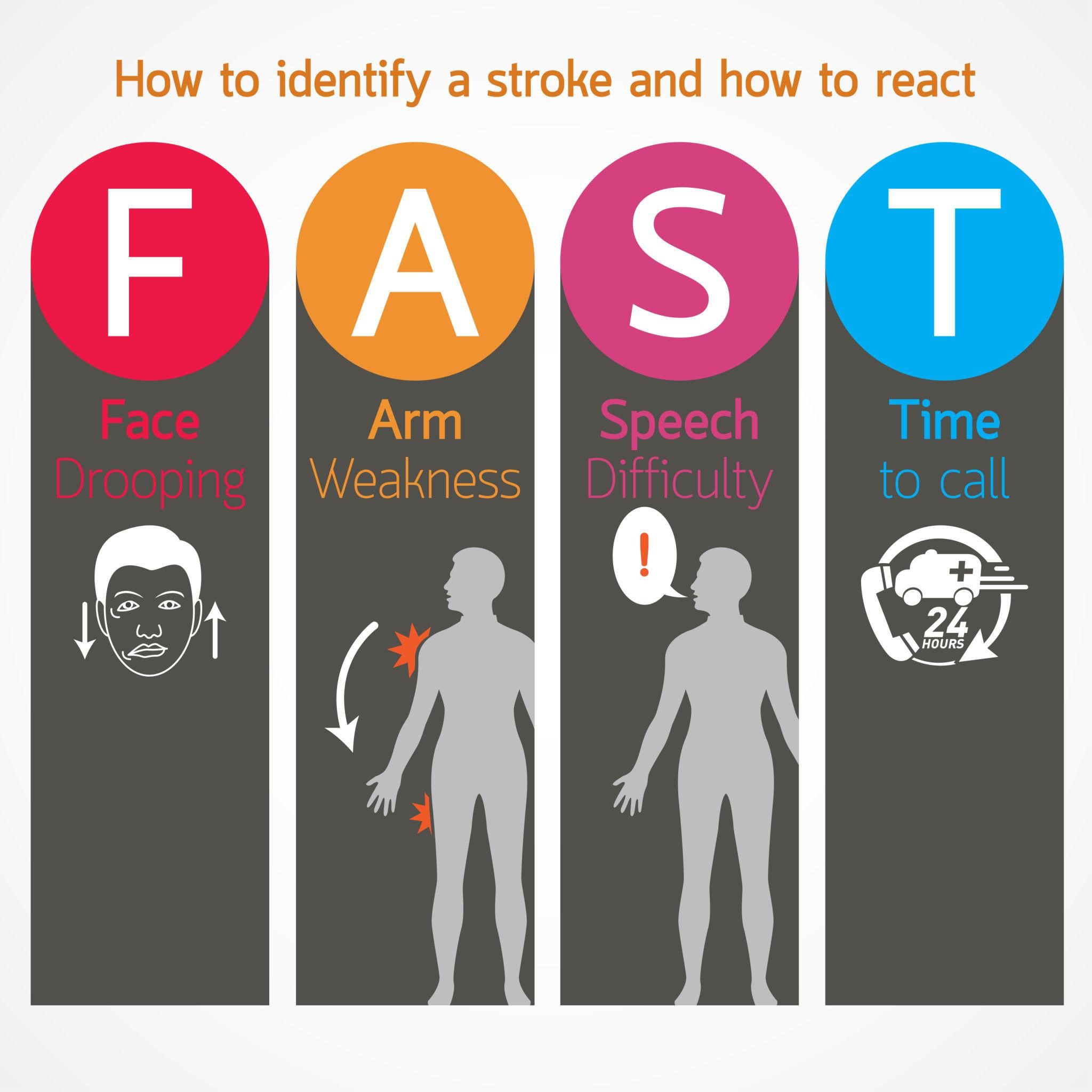
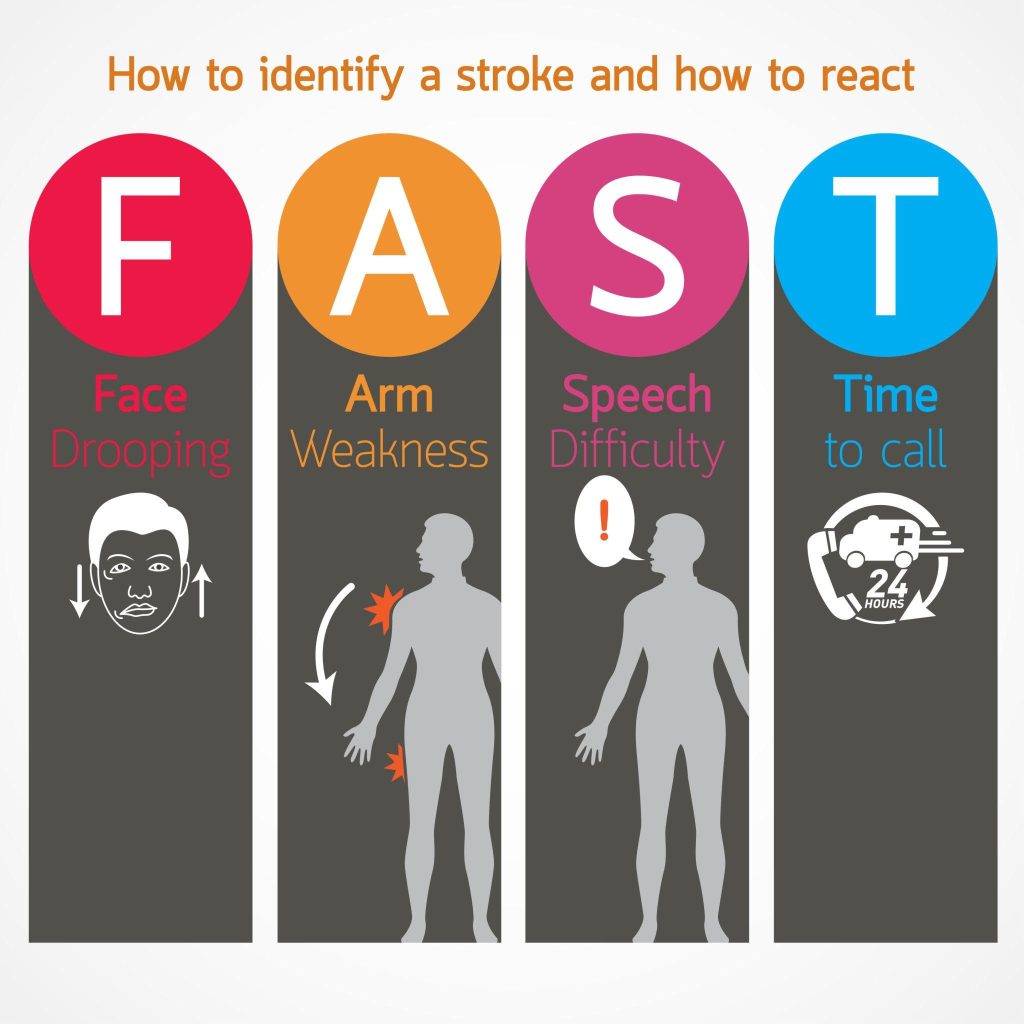
Remember FAST
|
Letter |
What to look for |
|
F — Face |
Ask the person to smile. Does one side droop? |
|
A — Arm |
Ask them to raise both arms. Does one arm drift downward or feel weak? |
|
S — Speech |
Is speech slurred, hard to understand, or absent? |
|
T — Time |
If you notice any of these signs, call 911 right away. |
Other possible stroke symptoms


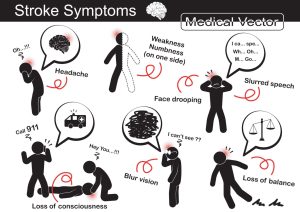
Stroke can also cause sudden:
- Numbness or weakness, especially on one side of the body
- Confusion or difficulty understanding speech
- Vision loss or double vision
- Severe headache with no known cause
- Dizziness, loss of balance, or trouble walking
Why “time is brain”
During an ischemic stroke, a blood vessel is blocked and brain tissue is deprived of oxygen. The sooner blood flow is restored, the more brain tissue may be saved. Treatments such as clot-dissolving medication and clot-removal procedures are time-sensitive.
What to do if you suspect a stroke
- Call 911 immediately. Do not wait to see if symptoms improve.
- Note the time the person was last known well (symptom onset or when they were last seen normal). This helps determine eligibility for certain treatments.
- Do not drive yourself to the hospital unless emergency services are unavailable. EMS can begin assessment and notify the stroke team en route.
- Do not give food, drink, or medications unless instructed by medical professionals. Swallowing may be impaired.
A quick reality check
Many people hope symptoms will pass. Sometimes they do—but that can still be dangerous. A transient ischemic attack (TIA) may cause stroke-like symptoms that resolve, yet it can be a warning sign of an impending stroke. Any sudden neurologic symptom deserves urgent evaluation.
Takeaway
F = Face drooping. A = Arm weakness. S = Speech difficulty. T = Time to call 911. If you notice any FAST sign—or any sudden one-sided weakness, speech problem, vision change, severe headache, or balance problem—seek emergency care immediately. Minutes matter.